

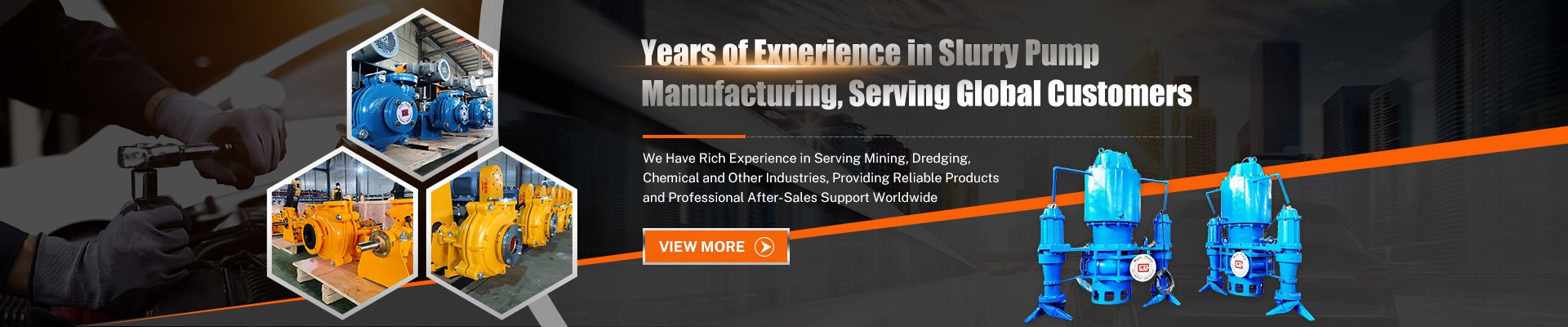
A gravel pump is a type of centrifugal slurry pump specifically used to transport solid-liquid mixtures containing large particles and strong abrasive materials. Its working principle is based on centrifugal force. The following outlines its core working process and key structural features:
Working principle
Impeller high-speed rotation: The motor drives the pump shaft to rotate the impeller at high speed, creating a low-pressure area at the pump inlet that draws in the sand and gravel slurry.
Centrifugal acceleration and discharge: The slurry is accelerated in the impeller passages under the combined action of centrifugal force and blade thrust, then thrown into the volute, where kinetic energy is converted into pressure energy, and finally discharged from the outlet.
Key structural design (for high wear conditions)
Flow passage materials: Made of high-chromium alloy, hard nickel, wear-resistant alloy steel, or ceramic composite materials, with a hardness ≥ 58HRC, to resist sand and gravel abrasion.
Impeller structure: Mostly semi-open or open designs, with short, thick blades, fewer blade numbers, and wide passageways, facilitating the passage of large particles and reducing clogging.
Shaft sealing types: Options include packing seal, auxiliary impeller seal, combination of packing + auxiliary impeller seal, or mechanical seal, suitable for different pressure and wear environments.
Bearings and support: Heavy-duty tapered or cylindrical roller bearings are used, lubricated with grease, combined with a labyrinth seal to prevent slurry intrusion, ensuring long service life.


