

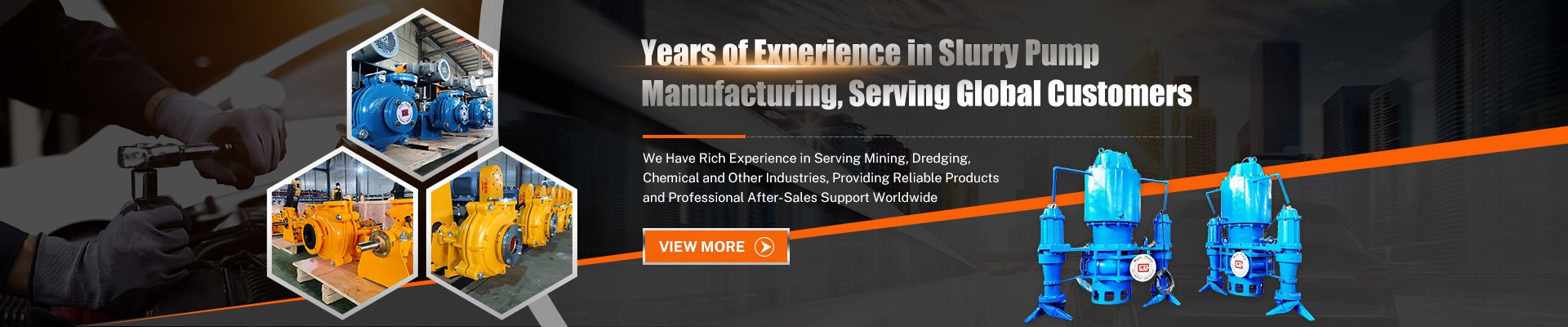
To identify a river sand pump (also known as a sand suction pump or gravel pump), it is necessary to make a comprehensive judgment based on its structural characteristics, materials, performance parameters, and application scenarios.
Core Structural Features
Mainly horizontal structure: Mainstream river sand pumps are mostly horizontal, single-stage, single-suction, cantilever centrifugal pumps, using a single pump casing design. The pump casing and pump cover are clamped with a coupling, and the discharge direction can be adjusted within a 360° range.
Smooth flow passage: To accommodate large particles, the impellers are mostly semi-open or open-type structures, with short and thick blades, fewer in number, and wide flow channels.
Bottom equipped with stirring impeller (submersible type): Submersible river sand pumps usually have a stirring impeller at the bottom to loosen sedimented mud and sand, enabling high-concentration suction.
Key Material Requirements
High wear-resistant materials: Flow-through components (impeller, pump body, wear plate, etc.) are generally made of high-chrome alloy, hard nickel, or wear-resistant alloy steel, with a hardness of not less than 58 HRC (some products reach HRC 62).
Varied sealing systems: Common sealing types include packing seals, expeller seals, mechanical seals, or combined seals to cope with high-wear working conditions.


